Xenobots, around 1 millimeter in size, have many useful applications including delivering medicine to a particular part of the human body, removing plaque from blood vessels, and cleaning the ocean from microplastics and radioactive waste.
What are they?
"In fact, these are living machines," says Joshua Bongard, a computer scientist and robotics expert at the University of Vermont who presided over the research. "Xenobots are neither a traditional robot nor an animal. It's a new class of creatures: a living programmable organism."
To create biorobots, scientists from the University of Vermont have developed artificial intelligence algorithms capable of creating thousands of new forms of life. The successfully developed organisms were kept and perfected, while failed ones were discarded. After the algorithm ran one hundred cycles, the most promising designs were picked for testing.
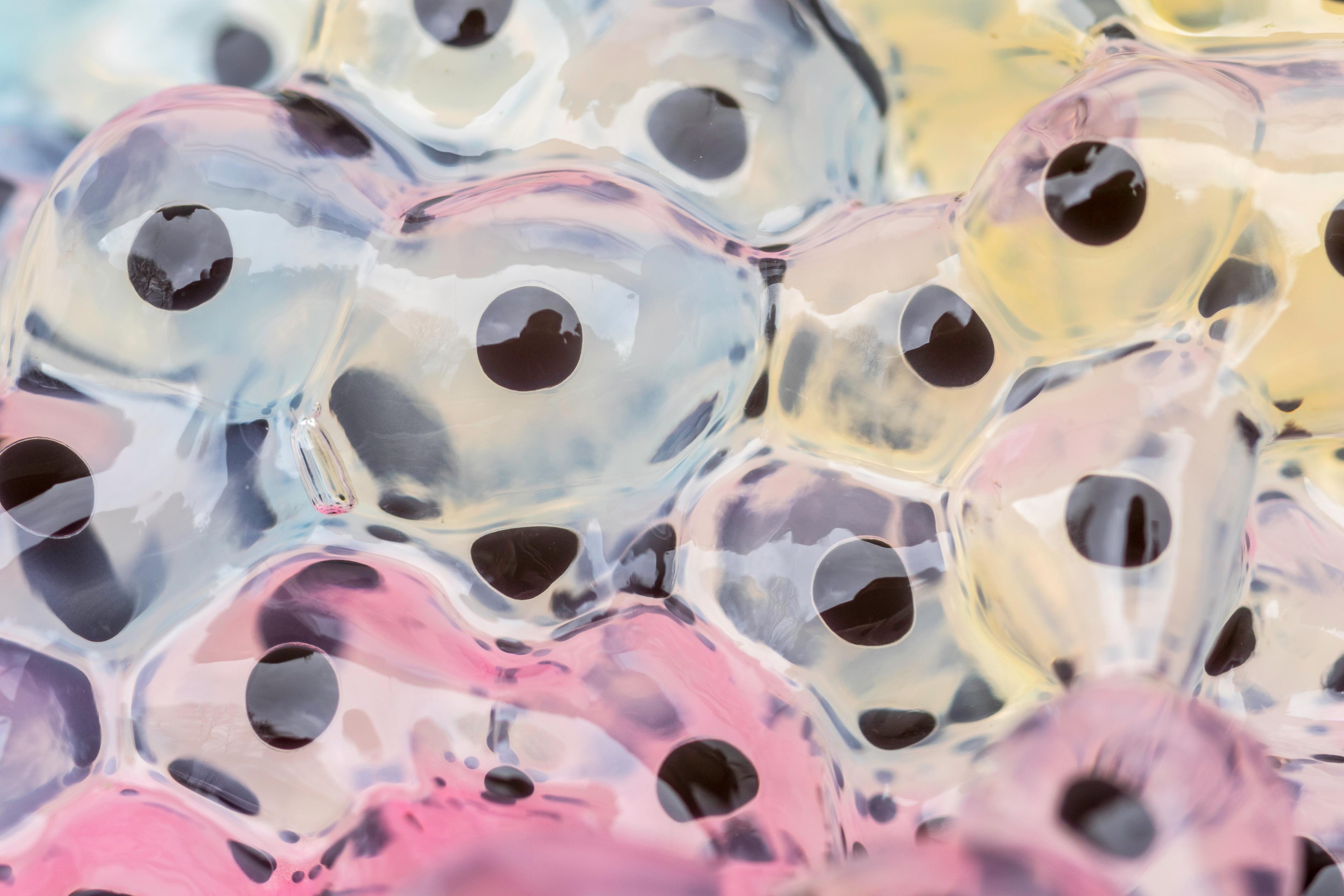
A team from Tufts University led by Michael Levin, Ph.D. in Biology, and microsurgeon Douglas Blackiston has converted this brilliant idea into reality. They have taken stem cells from embryos of African frogs of the Xenopus laevis species (which gave the name of "xenobots"). Using microscopic forceps and even smaller electrodes, they had cut the cells and joined them under a microscope in the way it was programmed by artificial intelligence.
The assembled cells created new organisms. The frog heart cells worked as motors, making the robots move, while skin cells created the frame. During tests, the robots moved in circles and transported microscopic granules to the center.
Biorobots can move in an orderly manner and explore the aquatic environment for several days or weeks, living on embryonic energy stores. They don't eat, don't reproduce themselves, and have a lifespan of around one week.
Xenobots are great at self-healing. When scientists damaged the cells of one of the robots, it healed the injury on its own. However, if a xenobot is turned over, it will not be able to turn back over and will lay on its back like a beetle. Another important note is that the newly created organisms are fully biodegradable.
Cracking the code
To have a developing and functioning organism, the cells need to circulate information inside themselves and among each other. But what defines the anatomy of the cells? Xenobots are 100 % made from frogs' DNA — but these are completely new creatures, not frogs.
Creating xenobots is a first step toward cracking the morphogenetic code, providing a deeper understanding of organisms, their development, and information inside them. This innovation unites biology and computer technology.
Should we be afraid?
This research embodies what people fear: that artificially created forms of life can get out of control. But this will not happen in the case of xenobots (according to their creators). After a biorobot completes its mission, it becomes a bunch of dead cells that will vanish without a trace.
"If humanity is going to survive into the future, we need to better understand how complex creatures, somehow, emerge from simple ones," says Levin.
The ethical questions related to organisms created in this way are inevitable, even if these creatures are not able to think and feel as we humans do. A negative social response to such experiments is quite natural. But it should be remembered that biological species created by artificial intelligence can fix birth defects, remove tumors, regenerate the human body and even conquer aging. It is not science fiction — it is our near future.