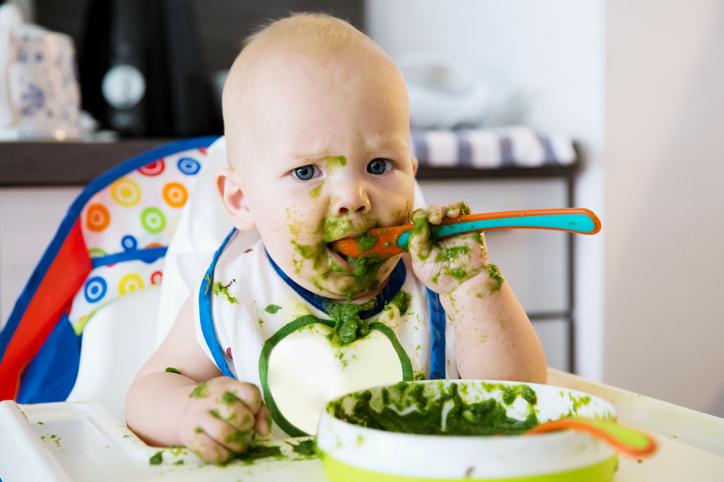
The child knows when he is full
The first thing to remember is that if a child is growing and developing normally, there is no reason to worry. Children begin to understand intuitively how much food they need. Do not force-feed, and do not turn meals into a struggle.
There are several reasons that may explain why a child does not want to eat: the child may be full, tired, distracted, or sick. It may be worth adjusting the feeding schedule for the baby or adjusting meal times and snack times for children. Don't worry — your child will always eat if he or she is hungry. If the child turns away from food or pushes the spoon away, the child is letting you know that he or she is currently full. If he child is often refusing food and is not feeling well, consult your pediatrician.
Common reasons for refusal
New foods: Generally, children are very wary of new food, and they may refuse them at first. This period can last for weeks or even months. Offer new foods, starting with very small portions, three times during the main meals. If the child refuses, do not overreact, but offer it again next time.
Lack of mood: Your child may be ===teething, tired, not yet ready to eat solid foods, or simply does not need as much food as adults.
Difficulty swallowing: Most children are ready for solid food at 4 to 6 months of age, but not all. If your baby has difficulty swallowing solid foods, he or she may seem to vomit while feeding. In this case, you need to put as little food in the spoon as possible. If the baby has difficulty swallowing, it is worth consulting a pediatrician to rule out other possible causes of vomiting.
Distraction: Sometimes it is much more interesting for a child to play with food, such as dropping it on the floor. This behavior is usually typical for nine-month-old babies. This is how classic signs of independence appear, as the baby is trying to control the feeding process. He is learning to eat and trying to become more independent.
Burping or regurgitation: Burping is common for babies. They usually go away by age one. Keep the child upright when eating, do not overfeed, and avoid playing with the baby immediately after eating.
What to look out for
Although a child's refusal to eat is often for a harmless reason, there are some symptoms that you should definitely pay attention to and seek immediate medical attention.
Vomiting: This can occur due to an immature digestive system, infection, medications, or motion sickness. Although it usually goes away on its own, see your pediatrician if your baby looks dehydrated or has been vomiting for more than 24 hours. Severe vomiting in infants 4 to 8 weeks old can be caused by pyloric stenosis, which blocks the flow of food into the intestines from the stomach. In this case, surgical correction may be necessary.
Food allergies: Food intake problems exist not only in infants but also in older children. These include food allergies, which can happen suddenly and occur in 8 % of children. Symptoms include diarrhea, vomiting, rash, abdominal pain, breathing problems, and swelling. The most common food allergies for children are milk/dairy, soybeans, eggs, wheat, nuts, fish, and seafood.
Food intolerance: Food intolerances are more common than food allergies. Although the symptoms may be similar, there is a fundamental difference between the two: food intolerance is related to the child's digestive system, not the immune system. Lactose, corn, and gluten intolerances are the most common for children. Symptoms of food intolerance include increased gas, bloating, diarrhea, and abdominal pain.
General worsening of the condition: If the child not only refuses to eat but also loses weight, looks lethargic and dehydrated, or is frequently moody, then it is time to contact your pediatrician to have your child examined.