Sweet, but not sugar
There are two types of substances that replace sugar. The first is sugar substitutes, which are close in structure to sugar, have a sweet taste, and are quite caloric, but they are digested more slowly than sugar, so they are safer and suitable for diabetics. The best-known sugar substitutes are:
-
Fructose. Similar in calories to sugar, but the glycemic index (GI) is about 20. It is considered healthy because it's found in fruits and vegetables.
-
Cons: It is essentially an isomer of glucose and in its pure form can be more harmful than sugar because it is processed by the liver into fat, increasing insulin resistance and the risk of diabetes.
-
Sorbitol, maltitol, erythritol, xylitol. These are alcohols that are slightly less sweet than sugar. They are added to baked goods, beverages, and gum. They are not digested, which means they have almost zero GI, do not cause tooth decay, and are less caloric.
-
Cons: Undigested substances often serve as food for intestinal bacteria, so 30-100 g or more of sweeteners per day can lead to GI problems.
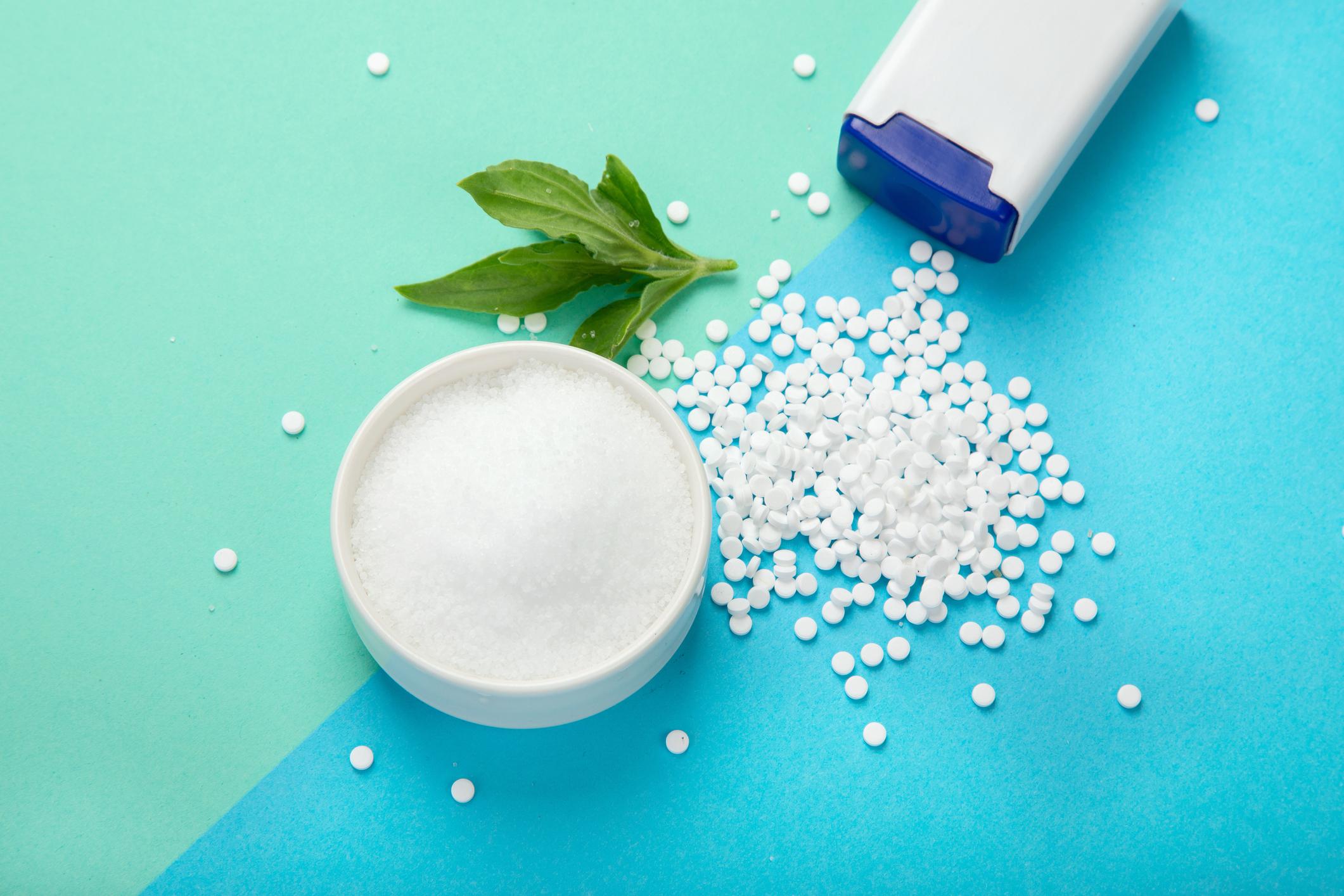
The second type of substance is ===sweeteners. These have zero GI, do not affect blood glucose levels, have almost zero calories, and are hundreds and thousands of times sweeter than sugar. The best-known sweeteners are:
-
Saccharin. The most popular and cheapest, used in baked goods.
-
Cons: has a metallic flavor.
-
Stevia. Extract of the leaves of a South American plant, advertised as natural.
-
Cons: Although natural, it is not harmless, and it also has a bitter taste. Stevia contains several chemicals that have a sweet taste. However, the safety of some of the chemicals is still not proven. In the U.S. only several components of Stevia are allowed: rebaudiosides and stevioside.
-
Aspartame. The most researched and so far the safest. It breaks down into substances that are already in our bodies and in food. It also tastes better than the previous ones on this list.
-
Cons: not suitable for baking and heating.
-
Sucralose. It most resembles sugar in taste and is used in baking.
-
Cons: high price.
-
Neotame. A new sweetener, 10,000 times sweeter than sugar, similar in structure to aspartame, allows heating.
-
Cons: not yet identified.
Should you use them?
All approved sugar substitutes differ in taste, price, and heat tolerance. They do help you to avoid eating unhealthy sugar, thus allowing you to lose weight and reduce disease risks. They are safe for health, but only in the acceptable amounts that your doctor advises. If you exceed the dosage, side effects include headache, dizziness, mood swings, intestinal upset, hyperactivity, and insomnia.
Many studies discuss psychological factors that, on the contrary, provoke overeating in the background of sugar substitutes. Some people begin to abuse unhealthy products with sweeteners, considering them harmless. Others, whose brain does not receive satiety signals from sweets, will seek to compensate by binging on food. This means that sugar substitutes do not solve the main purpose, which is the formation of proper eating habits.
The American Association of Cardiologists and Diabetologists recommends the use of sweeteners as a temporary solution for weaning off sugar. It is also worth looking at the composition of sweeteners, as manufacturers sometimes add fructose to offset the bitterness of other substances.