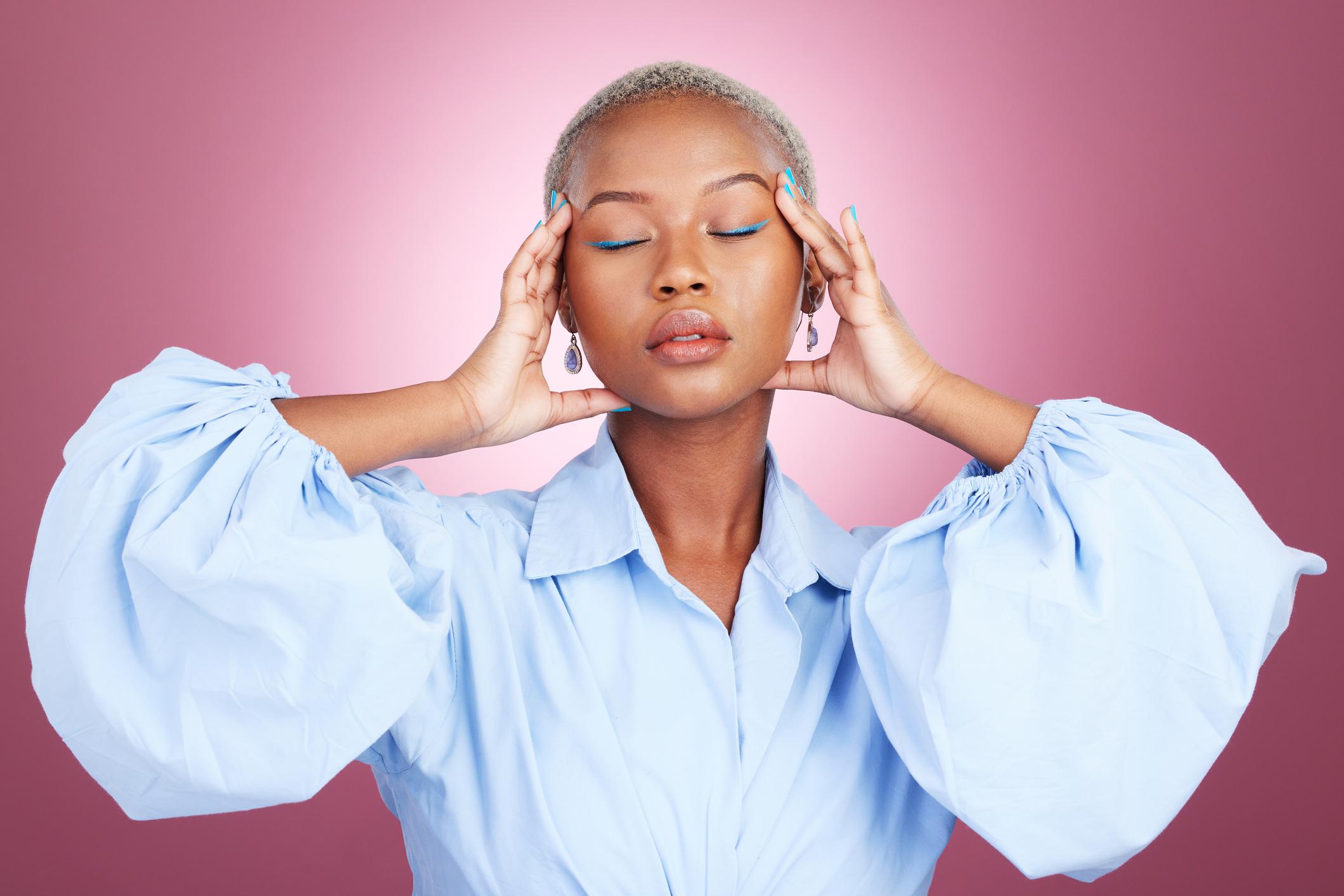
How can you tell if it’s a migraine or a common headache?
To do this, you need to look at the four types of headaches:
Tension headache—mainly associated with stress. It seems to girdle and squeeze the head. It does not interfere with life: if you are distracted the pain will disappear, but it will reappear when the distraction stops.
Cluster—severe pain behind the eye, above the eye, or in the temple, as well as lacrimation, runny nose, drooping, or swelling of the upper eyelid. The reasons can be genetic, and causes include alcohol, tension, high altitude, flashing lights.
Synogenic facial and rhinogenic—bursting pain near the nose, in the temple, and behind the cheekbones that gets worse when bending over. A common problem for allergy sufferers and people with sinusitis.
Migraine—throbbing, alternate pain in the temples. The attack can last from 4 hours up to 3 days, accompanied by nausea or vomiting, light, and noise. Often a headache is preceded by an aura-flashes, glare, a feeling of foreign tastes and odors. Even simple physical activity increases the pain.
What are the causes?
Migraine attacks in women can be associated with menstruation when estrogen levels drop sharply. With the onset of menopause, migraines may go away on their own.
Another reason for migraines is a lack of an enzyme that is supposed to destroy amines, which are biologically active substances that are in a number of foods. If amines build up in the body, blood vessels rapidly dilate and constrict. The list of such foods is long, including chocolate, red wine, and other spirits, cheeses, nuts, beans, yogurts, and so on.
Migraines are caused by foods with caffeine, which constrict blood vessels, but when they dilate, a headache can occur.
Provoking factors can include stress, hunger, cold food, and a wide range of medicines.
What to do?
Migraines are very individual, remedies are countless. But the basic rules of self-help are as follows:
It is necessary to identify the factors that cause migraines and avoid them. To do this, doctors advise keeping a migraine diary to note when the head hurts, how exactly it hurts if it’s caused by what you drank, and what helped to make the headache go away.
In order for attacks to occur less often, make sure you avoid stress, quit smoking, normalize hormonal levels, don’t overwork, establish a sleep-wake regime, eat right, and avoid junk food. At the first sign of a migraine, you must take pain relievers – they will surely help!
For the prevention of migraines, doctors may prescribe antiepileptic drugs and antidepressants, beta-blockers, or calcium channel blockers. If there is vomiting, antiemetics are a good treatment, as well as triptans, which act on the vascular walls to provide cerebral blood supply. Examination (EEG, MRI, ultrasound) is recommended if the migraine feels atypical, including if the attacks intensify, become more frequent, or include intense vomiting or other non-standard signs.